









1990-es évekbeli reprodukció egy 19–20. század fordulójának dohányreklám-hagyománya alapján
Ez a közel 3 kilogrammos, kézzel festett öntöttfém PUNCH reklámfigura nem 19. századi eredeti, hanem az 1990-es években készült reprodukció, amelyet a régi mechanikus perselyek, bolti reklámfigurák és a PUNCH szivarmárka történelmi arculatának felidézésére terveztek. Érdekességét éppen az adja, hogy egy több mint másfél évszázados reklámtörténetet sűrít egyetlen tárgyba: Mr. Punch angol népi figuráját, a kubai szivargyártás világát és a viktoriánus reklámkultúrát.

Miért készültek ilyen tárgyak?
A 19. század második felétől a gyártók egyre gyakrabban használtak háromdimenziós reklámfigurákat, mechanikus perselyeket és látványos bolti tárgyakat termékeik népszerűsítésére. Egy karakteres figura sokkal könnyebben megragadta a vásárló figyelmét, mint egy egyszerű felirat, különösen trafikokban, bárokban és egyéb kereskedelmi helyiségekben.
A dohányipar különösen gazdag vizuális reklámkultúrát alakított ki. Szivardobozok, litografált címkék, plakátok, táblák és figurális reklámtárgyak tették az egyes márkákat azonnal felismerhetővé. A PUNCH ehhez ideális karakterrel rendelkezett: Mr. Punch alakja önmagában is egy embléma volt.
A 20. század végén újra divatba jöttek a korai amerikai és európai reklámtárgyak reprodukciói. Az ilyen darabokat nem eredeti 19. századi reklámeszközként, hanem dekorációs és gyűjtői célú, historizáló reprodukcióként készítették. A jelen példány is ebbe a körbe tartozik.

Ki az a Mr. Punch?
Mr. Punch története jóval régebbi mind a szivarmárkánál, mind a Punch magazinnál.
Ő az angol Punch and Judy bábszínház központi figurája, amelynek elődje az olasz commedia dell’arte Pulcinella alakjáig vezethető vissza. Angliában Punch már a 17. században ismert volt, és a 18–19. századra a brit populáris kultúra egyik legismertebb komikus figurájává vált.
Jellegzetességei könnyen felismerhetők: hosszú, előreugró orr, hegyes vagy bojtos sapka, széles vigyor, feltűnő gallér és karikatúraszerű testalkat.
Pontosan ezt a vizuális hagyományt idézi a persely figurája is. A nagy, hajlított bojtos sapka, a fodros gallér, az erőteljes profil és a széles mosoly egyértelműen Mr. Punch ikonográfiájából származik.
A karakter azért volt rendkívül alkalmas reklámcélokra, mert a brit közönségnek nem kellett elmagyarázni, kit lát: Punch önmagában felismerhető kulturális jelkép volt.


Mr. Punch, a PUNCH szivar és a Punch magazin
A PUNCH szivar történetében különösen érdekes a dátumok sorrendje.
A PUNCH szivarmárkát 1840-ben jegyezték be Kubában, egy Stockmann nevű német üzletemberhez kapcsolódóan. A márkát kifejezetten a jelentős brit szivarpiac számára pozicionálták, ezért a britek által jól ismert Mr. Punch kiváló névadónak és reklámfigurának bizonyult.
Ez egy évvel korábbi, mint a híres brit szatirikus lap.
A Punch, or The London Charivari első száma 1841. július 17-én jelent meg Londonban. Henry Mayhew és Ebenezer Landells alapította, és maga az újság is a Punch and Judy hagyomány Mr. Punch figuráját használta névként és emblémaként. A lap később a brit szatíra egyik legfontosabb intézményévé vált.
Ezért gyakori, de valószínűleg hibás leegyszerűsítés azt állítani, hogy a PUNCH szivar a Punch magazinról kapta a nevét. A legelfogadottabb kronológia szerint:
Punch and Judy / Mr. Punch → PUNCH szivar, 1840
Punch and Judy / Mr. Punch → Punch magazin, 1841
Vagyis a szivar és a magazin nem közvetlenül egymásból származik: közös kulturális ősük Mr. Punch. A félreértést tovább erősíti, hogy a későbbi PUNCH szivaros grafikákon Mr. Punch gyakran szivarral jelenik meg.
A márka később többször gazdát cserélt. 1884-ben Manuel López Fernández vásárolta meg, és neve hosszú időn keresztül megjelent a PUNCH szivargyűrűkön és dobozokon. A történeti PUNCH grafikákon megtalálható a „GRAN FABRICA DE TABACOS – PUNCH” megjelölés is, vagyis a reprodukción olvasható felirat nem egyszerűen kitalált „régies” szöveg: történelmi PUNCH márkagrafikákhoz kapcsolódik.


Ez a PUNCH reklámfigura
A bemutatott darab 1990-es évekbeli reprodukció, tehát nem szabad 19. századi eredeti mechanikus reklámperselynek tekinteni. Ugyanakkor kifejezetten régi reklámtárgyak stílusában és a PUNCH történelmi arculatának felhasználásával készült.
A figura festett öntöttfémből készült, ezért méretéhez képest rendkívül súlyos: körülbelül 2,9 kg.
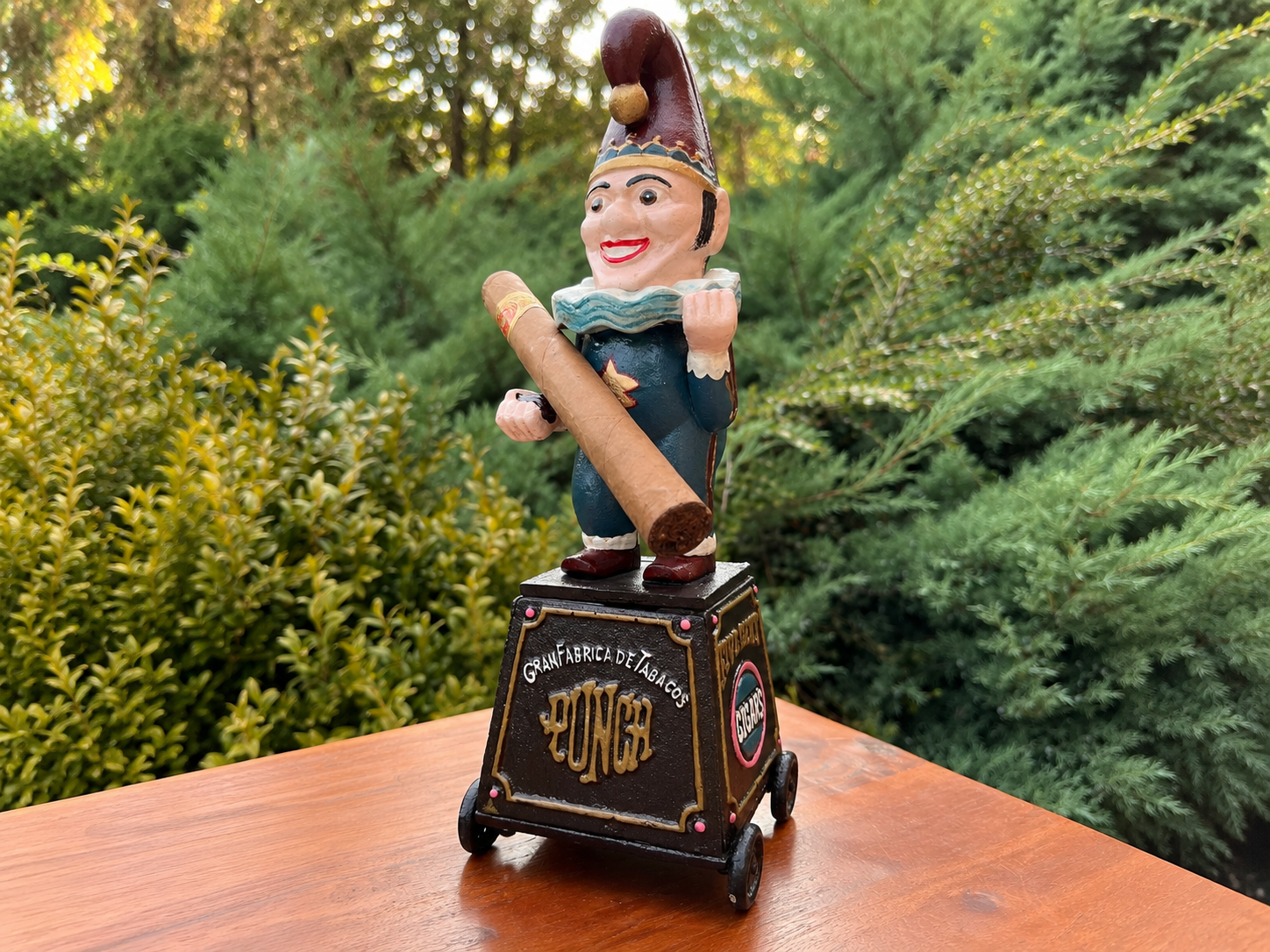
Mr. Punch sötétkék ruhát, nagy fodros gallért és jellegzetes, bojtos sapkát visel. Kezében szivar látható. A figura egy négykerekű, trapéz alakú talapzaton áll, amely egyszerre ad játékos és korabeli mechanikus perselyeket idéző megjelenést a tárgynak.
Az egyik oldalon nagy betűkkel:
FIVE CENT
CIGARS
olvasható, míg az előlapon a PUNCH márkanév fölött:
GRAN FABRICA DE TABACOS
felirat szerepel.
Ez utóbbi különösen szép részlet, mert közvetlenül visszautal a PUNCH történeti szivargrafikáira, amelyeken ugyanez a megfogalmazás megtalálható.


A talp alján pénzürítő nyílás és annak levehető fém fedele található. Az alsó részen öntött gyártói jelzés is látható. Mindezek tovább erősítik a régi mechanikus reklámperselyek megjelenését, miközben a tárgy reprodukciós eredete egyértelműen megkülönbözteti az eredeti 19. századi példányoktól.
Méretek: kb. 32 cm magas × 11 cm széles × 10 cm mély.
Tömeg: kb. 2,9 kg.
Anyag: festett öntöttfém.
Kivitel: többszínű, kézzel festett felület.
Kor: 1990-es évek.
Típus: historizáló PUNCH reklámfigura / persely reprodukció.
A nagy tömeg és a 32 cm-es magasság miatt nem apró dísztárgyról van szó: önálló display-darab, amely polcon, bárpulton, szivaros vitrinben vagy dohányreklám-gyűjteményben is erős vizuális elem.


Egy reklámfigura több mint 180 év történetével
A tárgy értékét nem az adja, hogy eredeti viktoriánus PUNCH reklámtárgy lenne – nem az –, hanem az, hogy az 1990-es évek historizáló reklámtárgy-kultúráján keresztül egy sokkal régebbi ikonográfiát elevenít fel.
A figura mögött ott áll a több évszázados Punch and Judy hagyomány, az 1840-ben bejegyzett kubai PUNCH szivarmárka, az 1841-ben indult brit Punch szatirikus lap, valamint a 19. századi szivaripar gazdag grafikai és reklámtörténete.
Ez teszi igazán érdekes gyűjtői darabbá: nem pusztán egy persely, hanem egy 1990-es évekbeli reprodukciója annak a reklámvilágnak, amelyben Mr. Punchból egy kubai szivarmárka több mint 180 éve felismerhető emblémája lett.


PUNCH – Mr. Punch Cast Metal Advertising Figure / Mechanical Coin Bank


This substantial hand-painted cast metal PUNCH advertising figure is a reproduction made in the 1990s, inspired by early mechanical coin banks, shop-display figures and the historic imagery associated with the PUNCH cigar brand.
The piece brings together more than a century of advertising and popular culture: the famous English character Mr. Punch, the history of Cuban cigar making, Victorian-era graphic advertising and the later tradition of reproducing early commercial collectibles.
Why Were Objects Like This Made?
From the second half of the 19th century, manufacturers increasingly used three-dimensional advertising figures, mechanical coin banks and colourful shop-display objects to attract customers and make their brands instantly recognisable.
These objects were particularly effective in tobacconists, bars, general stores and other commercial premises. A distinctive character could attract attention far more effectively than a simple written advertisement.

The tobacco industry developed an especially rich visual advertising culture. Cigar boxes, lithographed labels, posters, signs and figurative advertising objects helped distinguish individual brands in an increasingly competitive market.
PUNCH had an ideal character for this purpose: Mr. Punch was already instantly recognisable to a large part of the British public.
During the late 20th century, reproductions of early European and American advertising objects and mechanical banks became popular as decorative and collectible items. Pieces such as this were produced not as original 19th-century advertising objects, but as substantial historic-style reproductions celebrating the appearance and atmosphere of early commercial advertising.
This example belongs to that tradition.

Who Is Mr. Punch?
Mr. Punch is considerably older than either the PUNCH cigar brand or the famous Punch magazine.
He is the central character of the traditional English Punch and Judy puppet theatre. His origins can be traced back to Pulcinella, a character from the Italian commedia dell’arte tradition.
Punch was known in England as early as the 17th century and by the 18th and 19th centuries had become one of the most recognisable comic characters in British popular culture.
His appearance is unmistakable: an exaggerated projecting nose, pointed or tasselled cap, broad grin, elaborate collar and strongly caricatured body.
These same visual characteristics can clearly be seen in this advertising figure. The tall curved cap with its pom-pom, large ruffled collar, pronounced profile and broad smile all derive from the traditional iconography of Mr. Punch.
This recognisability made Punch particularly suitable as a commercial mascot. His image could identify a product even before the customer read the name printed beneath him.


Mr. Punch, PUNCH Cigars and Punch Magazine
There is an interesting historical relationship between Mr. Punch, the famous cigar brand and the British satirical magazine.
The PUNCH cigar brand dates from 1840 and is associated with a German businessman named Stockmann. The cigars were intended particularly for the important British market, making the already famous Mr. Punch an excellent name and advertising character.
This is significant because it predates the famous British magazine by approximately one year.
Punch, or The London Charivari first appeared in London on 17 July 1841. The magazine also adopted its name and emblematic character from the Punch and Judy tradition. It subsequently became one of Britain’s most influential satirical publications.
It is therefore tempting to say that PUNCH cigars were named after Punch magazine, but the chronology indicates otherwise.
Both the cigar brand and the magazine drew upon the same older cultural source: Mr. Punch of Punch and Judy.
The relationship can therefore be understood as two parallel uses of an already famous character. The cigar brand adopted Punch in 1840, while the magazine bearing his name appeared in 1841.
The connection became even stronger visually over subsequent decades because Mr. Punch was frequently depicted with a cigar. The imagery was perfectly suited to tobacco advertising and eventually became closely associated with the PUNCH cigar identity.
The cigar brand subsequently passed through different ownership. In 1884 it was acquired by Manuel López Fernández, whose name became associated with PUNCH cigar bands and packaging.
Historic PUNCH imagery also used wording such as “Gran Fábrica de Tabacos – PUNCH”, directly connecting the reproduction offered here with the visual language of the historic cigar brand.


The Present PUNCH Advertising Figure
The example offered here is a 1990s reproduction, rather than an original 19th-century mechanical advertising bank.
It was designed in the style of early advertising figures and mechanical coin banks while incorporating historic PUNCH branding and the unmistakable appearance of Mr. Punch.
The figure is made from heavy cast metal and has a considerable weight of approximately 2.9 kg, giving it a remarkably substantial and stable presence.
Mr. Punch wears a dark blue costume with decorative details, a large pale blue and white ruffled collar and his characteristic tall curved cap. His exaggerated nose, smiling face and distinctive silhouette immediately identify the traditional character.
He also holds a cigar, reinforcing the connection between the character and the historic PUNCH cigar brand.
The figure stands on a decorative four-wheeled trapezoidal base, giving the object the appearance of an old advertising cart or mechanical bank.
One side bears the prominent inscription:
FIVE CENT
CIGARS
while the front displays the PUNCH name beneath the wording:
GRAN FABRICA DE TABACOS


This is an important decorative detail because the wording refers directly to the historic identity and advertising imagery of PUNCH cigars rather than being merely a generic vintage-style inscription.
The underside contains an access opening with a removable metal cover, further reinforcing the appearance of traditional mechanical and advertising coin banks.
A cast manufacturer’s marking is also visible underneath.
The entire piece is finished in multiple colours with a hand-painted appearance. Small variations and irregularities in the painted surface contribute to the deliberately aged character of the object.
Height: approx. 32 cm
Width: approx. 11 cm
Depth: approx. 10 cm
Weight: approx. 2.9 kg
Material: painted cast metal
Period: 1990s
Type: historic-style PUNCH advertising figure / coin bank reproduction
At approximately 32 cm high and weighing almost three kilograms, this is not a small tabletop novelty. It has the weight, scale and visual presence of a genuine display piece and works particularly well in a cigar collection, home bar, cigar lounge, tobacconist display or collection of vintage advertising memorabilia.
More Than a Century of Advertising History in One Object
The appeal of this piece does not depend upon presenting it as an original Victorian advertising object – it is not. It is a 1990s reproduction deliberately created in the tradition of much earlier advertising collectibles.
What makes it interesting is the history represented by the design.
Behind the figure lies the centuries-old tradition of Punch and Judy, the establishment of the PUNCH cigar brand in 1840, the appearance of the British Punch magazine in 1841, and the extraordinarily rich visual culture of 19th- and early 20th-century cigar advertising.
The result is a substantial and highly decorative collectible that combines the history of tobacco advertising with one of the most recognisable characters in British popular culture.
A striking display piece for collectors of PUNCH cigars, cigar memorabilia, tobacco advertising, mechanical banks, vintage-style advertising figures and bar or cigar-lounge decoration.