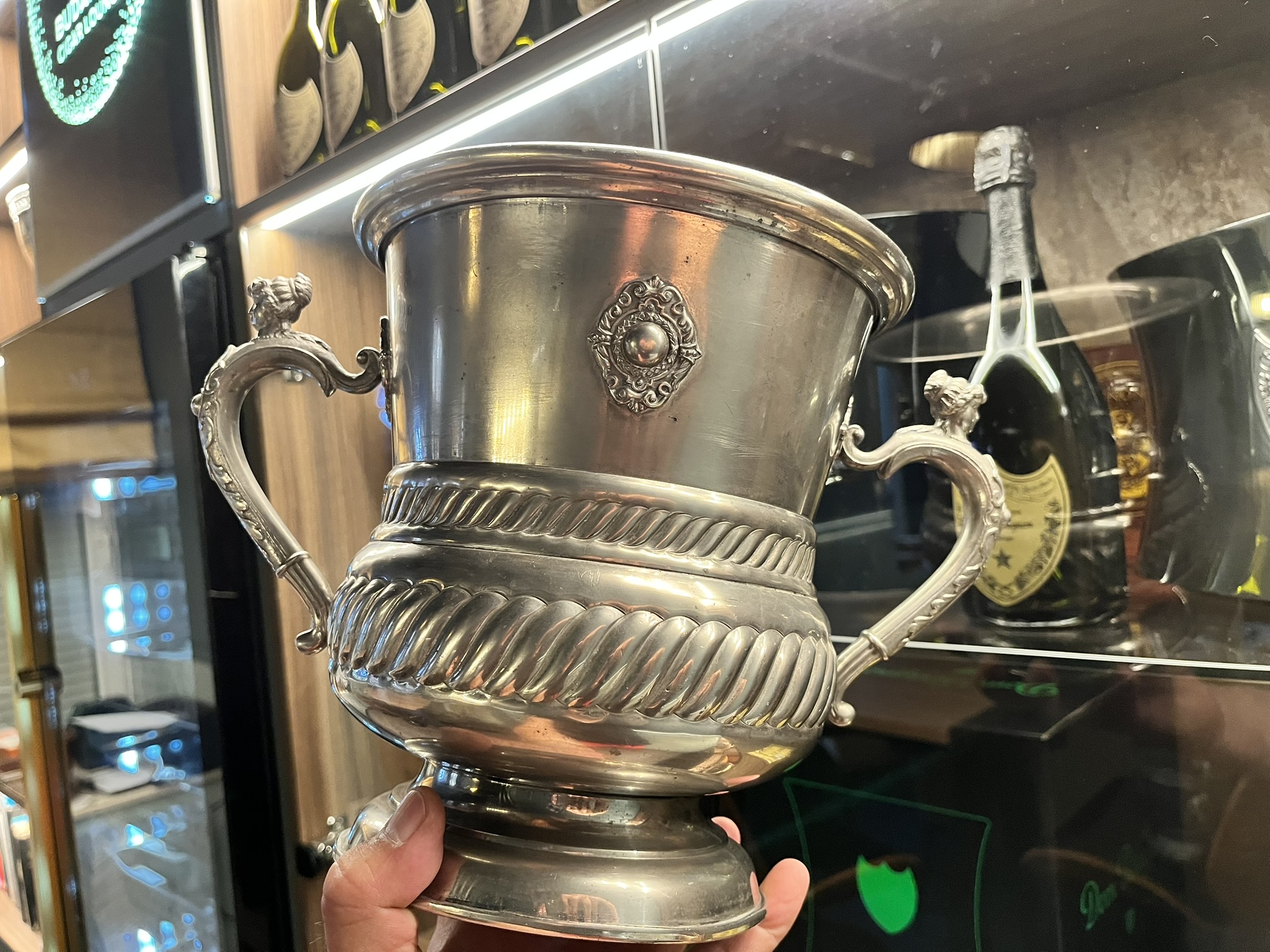







Elegáns német szecessziós (Jugendstil) bor- és pezsgőhűtő serleg a neves Gerhardi & Co. gyártmánya. A talpon található „GERHARDI & Co 518” jelzés alapján azonosítható darab a 20. század elejének iparművészeti ízlését tükrözi, amikor a használati tárgyakat is művészi igényességgel tervezték meg.
A lüdenscheidi Gerhardi & Co. a 19. század végétől Németország egyik jelentős fémáru- és ezüstözött dísztárgygyártó vállalata volt. Termékeik Európa-szerte keresettek voltak, különösen a Jugendstil időszakában, amikor a természet ihlette ornamentika, a növényi motívumok és a nőalakok meghatározó szerepet kaptak a formatervezésben.

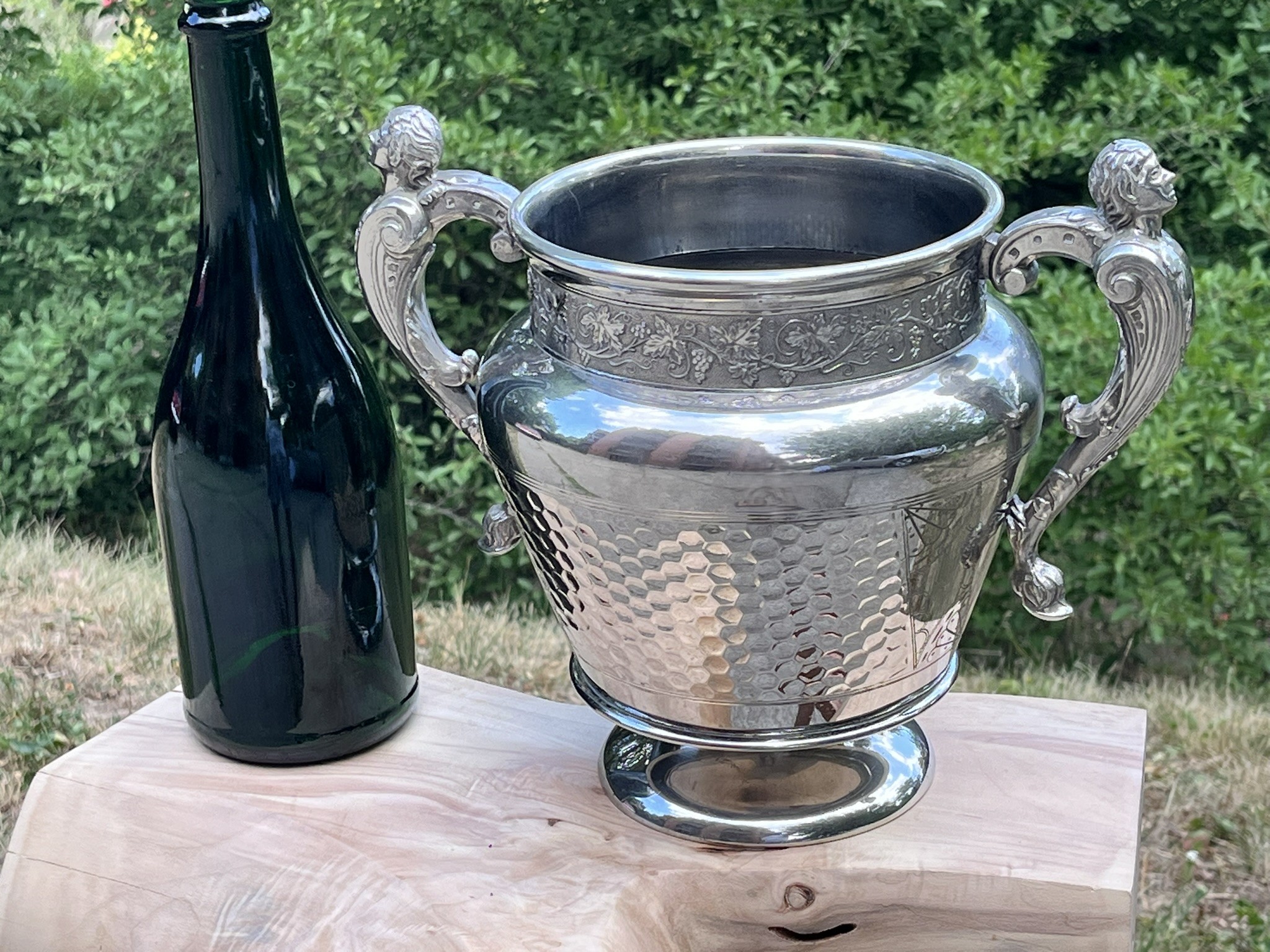
A serleg egyik legérdekesebb részlete a két figurális fogantyú. A hajlított, növényi indákra emlékeztető fülek felső részén stilizált emberi alakok jelennek meg, amelyek a szecesszió kedvelt motívumai közé tartoznak. A perem körül futó szőlőinda- és levéldíszítés a bor kultúrájára utal, míg a testet borító kalapált hatszögmintás felület és a geometrikus ornamentika már az Art Nouveau és a korai Art Deco közötti átmenetet idézi.
A tárgy eredetileg bor vagy pezsgő hűtésére szolgált, de ma önálló dekorációként is megállja a helyét egy bárban, borospincében, dolgozószobában vagy klasszikus enteriőrben. A súlyos, tömör kivitel és a gazdag részletképzés egyaránt a korszak minőségi német fémművességét képviseli.


Méretek:
- Magasság a fogantyúk tetejéig: 25 cm
- Magasság a peremig: 22,5 cm
- Felső átmérő: 17 cm
- Szélesség fogantyúkkal: 31 cm
- Súly: 1,5 kg
A tárgy stílusát a német Jugendstil és a historizmus utóhatásának találkozása jellemzi. A figurális fogantyúk szinte szobrászati elemként kapcsolódnak a testhez, míg a szőlőlevél- és indadíszítés a természet organikus világát idézi. A kalapált felület fényjátéka kontrasztot alkot a sima, polírozott részekkel, ezáltal mozgalmasságot és vizuális gazdagságot kölcsönöz a kompozíciónak. A forma klasszikus serlegalakot követ, ugyanakkor a díszítőelemek már a századforduló dekoratív szecessziós szemléletét képviselik.
Egy karakteres, gyűjthető darab a német iparművészet fénykorából, amely egyszerre használati tárgy és dekoratív műtárgy.


Gerhardi & Co Jugendstil Wine & Champagne Cooler Urn – Figural Handles, c. 1900–1915


Elegant and uncommon German Jugendstil (Art Nouveau) wine and champagne cooler urn manufactured by Gerhardi & Co. The mark “GERHARDI & Co. 518” on the base identifies the maker and model, placing the piece among the decorative metalware produced during the golden age of German Art Nouveau at the beginning of the 20th century.
Founded in Lüdenscheid, Germany, Gerhardi & Co. became one of the country’s respected manufacturers of silver-plated and decorative metal objects. The company was particularly known for combining practical functionality with artistic design, producing tableware, serving pieces, and decorative objects that reflected the refined tastes of the Jugendstil era.


One of the most striking features of this urn is its pair of sculptural figural handles. The flowing, organic forms rise from the body of the vessel and culminate in stylized human figures, a motif frequently encountered in Art Nouveau design. Around the rim runs a finely detailed frieze of grapevines, leaves, and tendrils, celebrating the culture of wine and conviviality. The body combines hammered honeycomb-style decoration with engraved geometric panels, creating a rich interplay of textures and light.
Originally intended as a wine or champagne cooler, the piece also serves beautifully as a decorative object in a home bar, wine cellar, restaurant, library, or classic interior. Its substantial weight and finely executed details reflect the high standards of German metal craftsmanship from the period.


Dimensions
- Height to top of handles: 25 cm (9.8 in)
- Height to rim: 22.5 cm (8.9 in)
- Top diameter: 17 cm (6.7 in)
- Width including handles: 31 cm (12.2 in)
- Weight: 1.5 kg (3.3 lbs)


Artistic Description
This vessel is a fine example of the transition between late Historicism and German Jugendstil. The figural handles function almost as miniature sculptures, seamlessly integrated into the overall composition. The vine-leaf ornamentation evokes themes of abundance, celebration, and wine culture, while the hammered surface introduces depth and visual movement. The elegant urn-shaped silhouette is rooted in classical forms, yet the organic curves and decorative motifs unmistakably reflect the Art Nouveau fascination with nature and flowing lines.
A characterful and collectible piece from the golden age of German decorative arts—equally appealing as a functional wine or champagne cooler and as a decorative display object in its own right.